
Luxor
The world’s greatest open-air museum
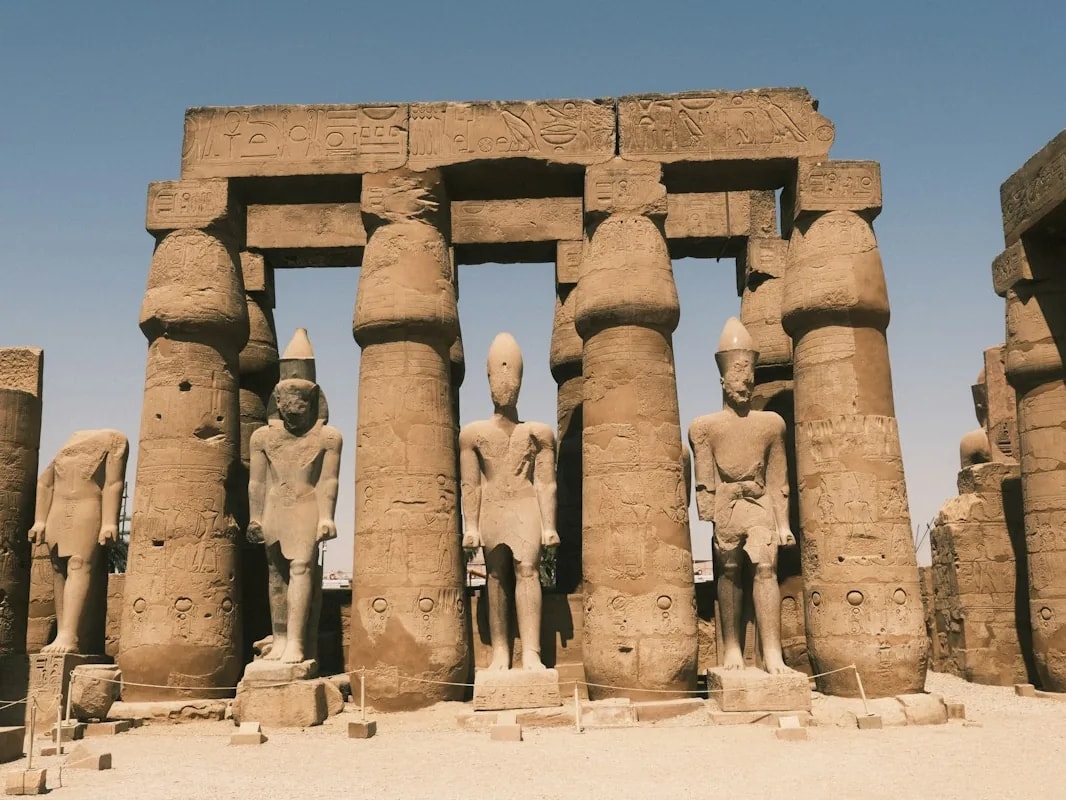
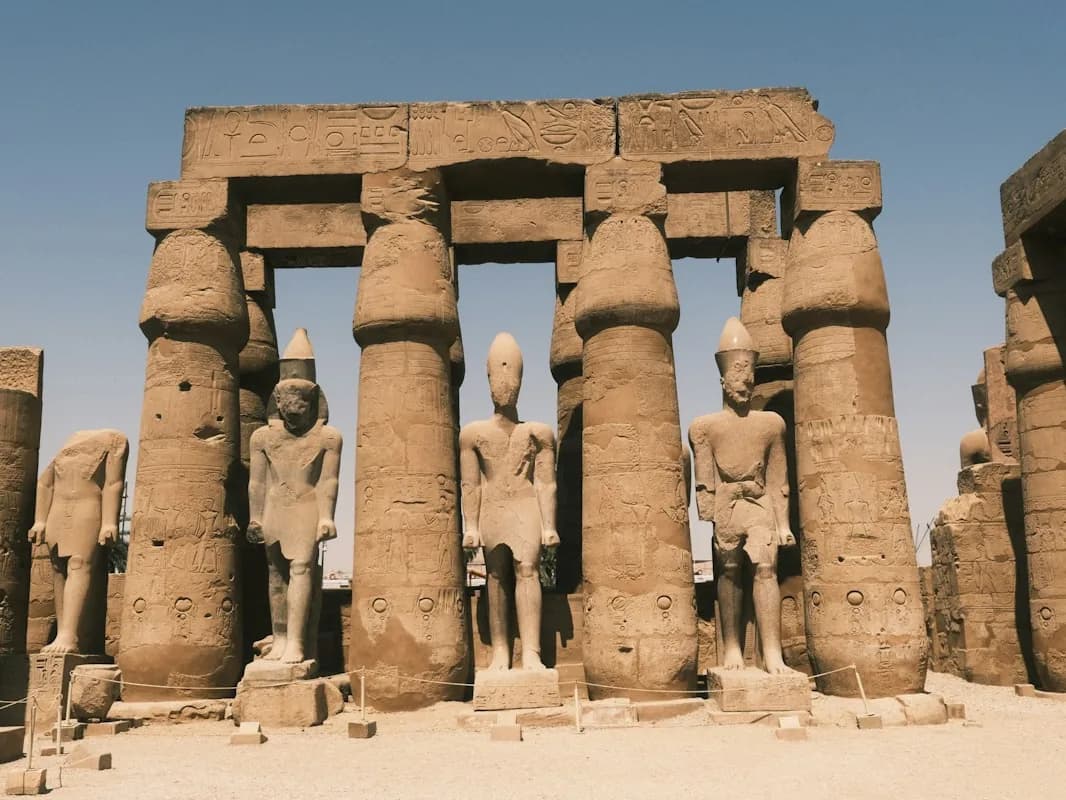
Ancient Thebes, split by the Nile: temples and daily life on the east bank, tombs and the afterlife on the west. Few places on earth hold so many monuments in one place — Karnak’s forest of columns, the painted tombs of the Valley of the Kings, and Hatshepsut’s temple cut into the cliffs.
Places in Luxor
Pins are approximate.
The largest religious building ever constructed, a forest of columns built over 2,000 years.
Trips that stop here
What to do
- Walk the Great Hypostyle Hall's 134 columns
- See the Sacred Lake
- Watch the evening Sound & Light Show
Good to know
- Go early morning or for the evening show — midday sun and crowds are both intense
- It's larger than it looks; budget 2+ hours
- Best time
- Early morning, or evening for the Sound & Light Show.
- What to wear
- Modest, breathable clothing; comfortable shoes for uneven stone.
- Weather
- Very hot outside winter months; largely unshaded.
The temple at the heart of modern Luxor, linked to Karnak by an avenue of sphinxes — glowing at dusk.
Trips that stop here
What to do
- Walk the Avenue of Sphinxes
- See the colonnade of Amenhotep III
Good to know
- Late afternoon into dusk, when the lights come on
- Best time
- Late afternoon and after dark.
- What to wear
- Modest, breathable clothing.
- Weather
- Warm; it cools in the evening.
A small Nile island south of Luxor covered in banana plantations, reached by felucca.
Trips that stop here
What to do
- Sail over by felucca
- Walk through the banana groves
- Try fresh banana or fruit juice from local growers
Good to know
- A relaxing half-day add-on, not a full day's activity
- Best combined with a Nile felucca sail
- Best time
- Late afternoon, timed with a felucca sail.
- What to wear
- Casual, comfortable clothing for a boat trip.
- Weather
- Right on the water — a little cooler than inland sites.
Sunrise hot-air balloon flights lifting off from the West Bank, drifting over temples, tombs, and green Nile farmland.
Trips that stop here
What to do
- Watch sunrise over the Nile Valley from the air
- Spot the Valley of the Kings and Hatshepsut Temple from above
- Photograph the balloons inflating at dawn
Good to know
- Pickup is pre-dawn, often 4:30-5am — book the night before
- Flights depend on wind and can be cancelled last-minute
- Reserve well ahead in peak season, as flights sell out
- Best time
- Sunrise only — that's the entire experience.
- What to wear
- Warm layers for the pre-dawn chill — it warms up quickly once airborne.
- Weather
- Cool before dawn, comfortable once the sun is up.
Two towering stone statues of Amenhotep III, standing alone in a field where his mortuary temple once stood.
Trips that stop here
What to do
- Photograph the two colossi against the West Bank hills
- Learn the story of the statues' famous ancient 'singing' cracks
- Stop briefly on the way to other West Bank sites
Good to know
- A quick 15-20 minute stop, easy to combine with anything else on the West Bank
- Free to view from the roadside — no ticket needed
- Best time
- Morning or late afternoon, en route to other West Bank sites.
- What to wear
- Casual, comfortable clothing.
- Weather
- Fully exposed, roadside field — hot with no shade.
Tombs of Egypt's New Kingdom pharaohs, including Tutankhamun's, cut deep into the west bank hills.
Trips that stop here
What to do
- Enter a selection of painted royal tombs
- See Tutankhamun's tomb (separate ticket)
- Learn the tombs' afterlife symbolism from a guide
Good to know
- Standard tickets cover 3 tombs — choose which in advance
- Photography inside tombs is often restricted or ticketed separately
- Go first thing in the morning — it gets very hot and crowded
- Best time
- Early morning, before the heat and tour buses arrive.
- What to wear
- Modest, breathable clothing; comfortable shoes for uneven ground and steps.
- Weather
- Exposed desert valley — extremely hot outside winter months.
A temple carved directly into the cliffs of Deir el-Bahari for Egypt's most powerful female pharaoh.
Trips that stop here
What to do
- Walk the temple's dramatic terraced colonnades
- Photograph it against the cliff backdrop
- Combine with a Valley of the Kings visit — they're minutes apart
Good to know
- Best light for photos is mid-morning
- Pair with the Valley of the Kings in one west-bank trip
- Best time
- Morning, alongside the Valley of the Kings.
- What to wear
- Modest, comfortable clothing; sun protection.
- Weather
- Fully exposed to sun; very hot outside winter months.
Ramesses III's vast mortuary temple, among the best-preserved and least-visited of the West Bank's major sites.
What to do
- Walk the fortified first pylon's battle reliefs
- See some of the best-preserved original paint colors on the West Bank
- Explore the temple's still-largely-intact inner courts
Good to know
- Far less crowded than the Valley of the Kings or Karnak
- Excellent for photography thanks to the light and preserved detail
- Best time
- Morning, combined with other West Bank sites.
- What to wear
- Modest, breathable clothing; comfortable shoes.
- Weather
- Exposed site — hot outside winter months.
A small, well-curated museum on the Nile corniche, tracing Thebes's history through a tightly chosen collection.
What to do
- See statues recovered from the Luxor Temple cachette
- View royal mummies of Ahmose I and Ramesses I
- Take in Nile views from the museum terrace
Good to know
- Much quieter and quicker than Cairo's museums — a good midday break
- Well air-conditioned, a good escape from the heat
- Best time
- Midday, when temples outside are at their hottest.
- What to wear
- Casual, comfortable clothing.
- Weather
- Air-conditioned indoors.
A focused corniche-side museum devoted entirely to the tools, process, and beliefs behind ancient Egyptian mummification.
What to do
- See the actual embalming tools and canopic jars used in the process
- Learn the religious meaning behind mummification, not just the technique
- View a genuine mummified priest on display
Good to know
- Small and quick — pairs easily with Luxor Museum or Luxor Temple
- A good introduction before visiting the tombs themselves
- Best time
- Any time — indoor and rarely crowded.
- What to wear
- Casual, comfortable clothing.
- Weather
- Air-conditioned indoors.
What to expect
- Very hot outside the winter months — visit tombs and temples early morning.
- Most sites involve walking on uneven ancient stone — comfortable shoes matter.
- Photography inside tombs is often restricted or ticketed separately.
- Balloon rides depend on weather and sell out early — book ahead.
Planning the practical side?
Currency, weather, what to wear, visas, airports and public holidays — everything for your trip in one place.

Your Egypt is waiting.
Tell us how many days you have and what draws you in. We reply with a plan and a price.